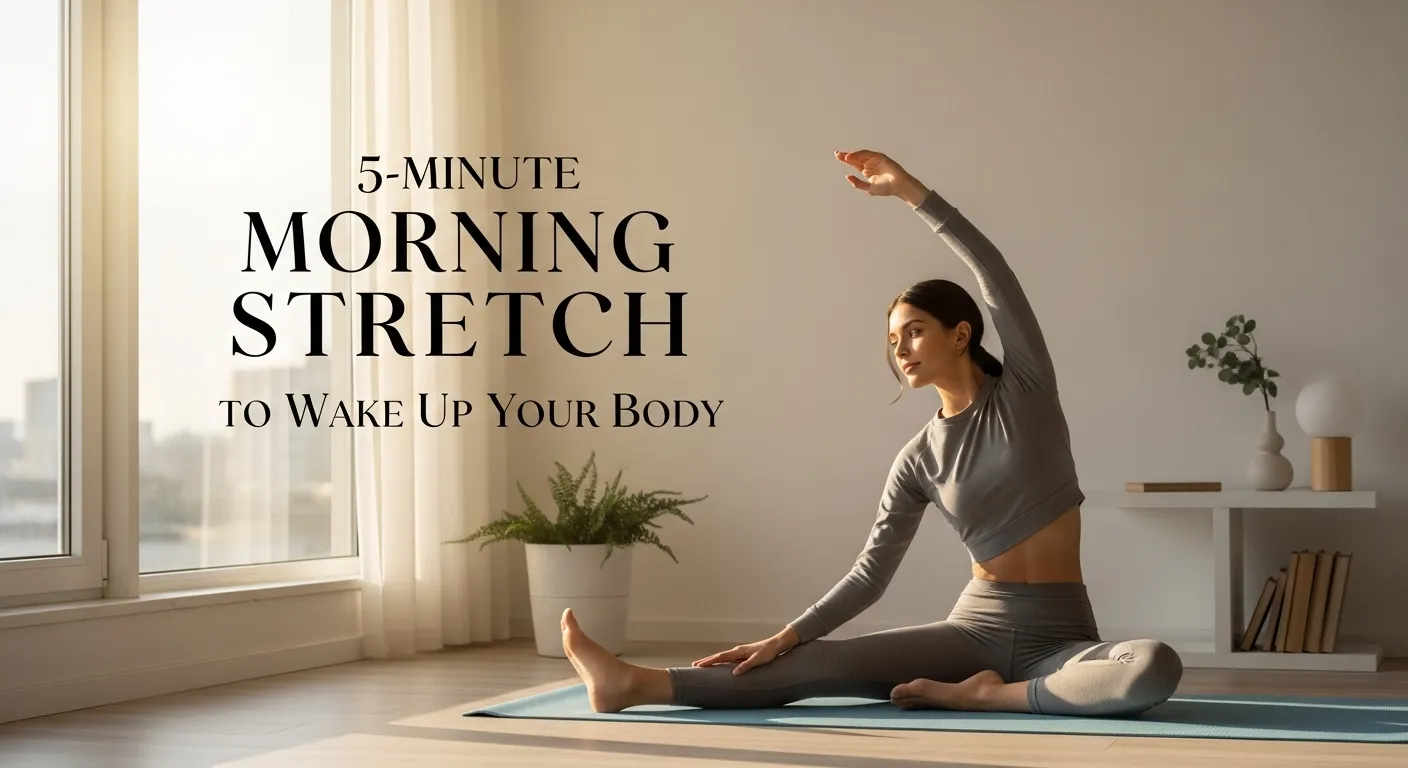
A short 5-minute morning stretch routine helps wake up musclesHere’s your paragraph with the link added naturally:
Combine Strength and Cardio in One Workout to build endurance, burn calories, and improve total-body fitness efficiently. This approach uses dynamic, full-body movements that raise your heart rate while strengthening major muscle groups, giving you a complete workout in less time.
Why Morning Stretching Helps
After a night’s rest, muscles and joints can feel tight from reduced movement. Gentle stretching helps by:
- Increasing blood flow and oxygen delivery
- Improving posture and mobility
- Reducing stiffness and mild aches
- Supporting alertness through breathing
Dynamic stretching in the morning promotes better flexibility and readiness for movement.
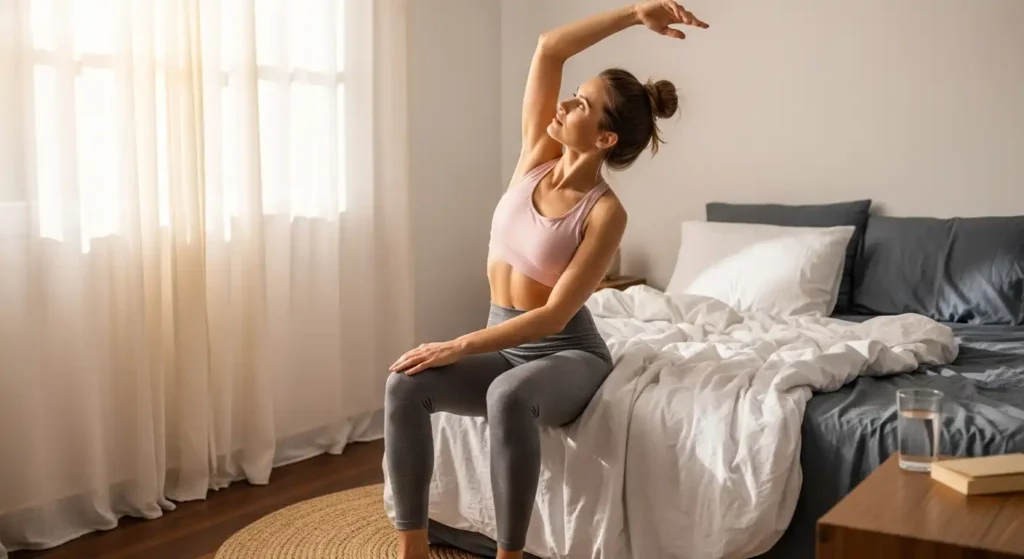
5-Minute Morning Stretch Routine
Each move lasts about 30–45 seconds. Focus on steady breathing and smooth motions.
| Stretch | How to Do It | Benefit |
|---|---|---|
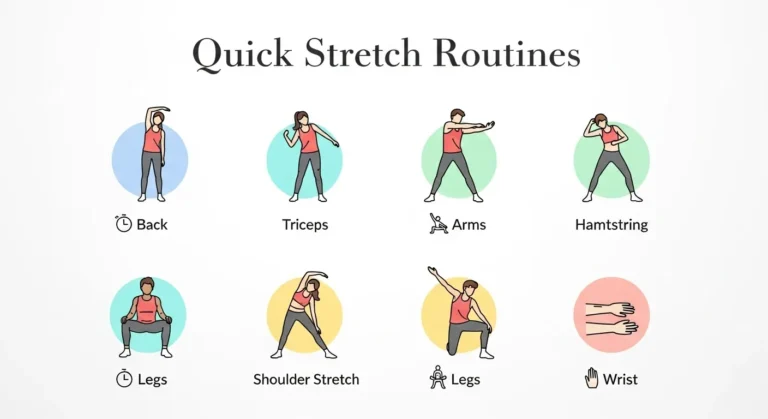
| Overhead Reach and Side Bend | Stand tall, interlace fingers, reach arms overhead, and lean to each side. | Lengthens the spine and stretches sides. |
| Cat-Cow Stretch | On hands and knees, alternate arching and rounding your back. | Loosens spine, neck, and shoulders. |
| Standing Forward Fold | Hinge at hips, reach toward the floor with soft knees. | Eases tension in hamstrings and back. |
| Shoulder Rolls and Arm Circles | Roll shoulders forward and backward, make small to large arm circles. | Warms upper body joints. |
| Seated Spinal Twist | Sit cross-legged, twist gently to each side with a tall spine. | Awakens core and aids digestion. |
| Standing Quad Pull | Hold one ankle behind you and draw it toward your glutes, switch legs. | Opens thighs and hips. |
| Deep Breathing Stretch | Stand tall, inhale as you raise arms overhead, exhale as you lower. | Calms the mind and steadies breathing. |
Tips for Best Results
- Stretch right after waking up to reduce stiffness.
- Keep movements gentle and controlled.
- Open curtains or drink water for an alert start.
- Add a short walk or light movement after stretching.
Why Morning Stretching Helps
Quick Answer:
Stretching after waking up activates muscles, boosts blood flow, and improves posture for the rest of the day.
Key Benefits:
- Increases oxygen flow to muscles
- Reduces stiffness from overnight inactivity
- Supports better posture and mobility
- Helps mental alertness through mindful breathing
Fact: Dynamic stretches in the morning prepare your body more effectively than static holds done cold.
Best Practice Tips
- Stretch right after waking up to release stiffness.
- Keep movements smooth and controlled, not rushed.
- Open windows or drink water for added alertness.
- Add a 3–5 minute walk afterward for full-body activation.
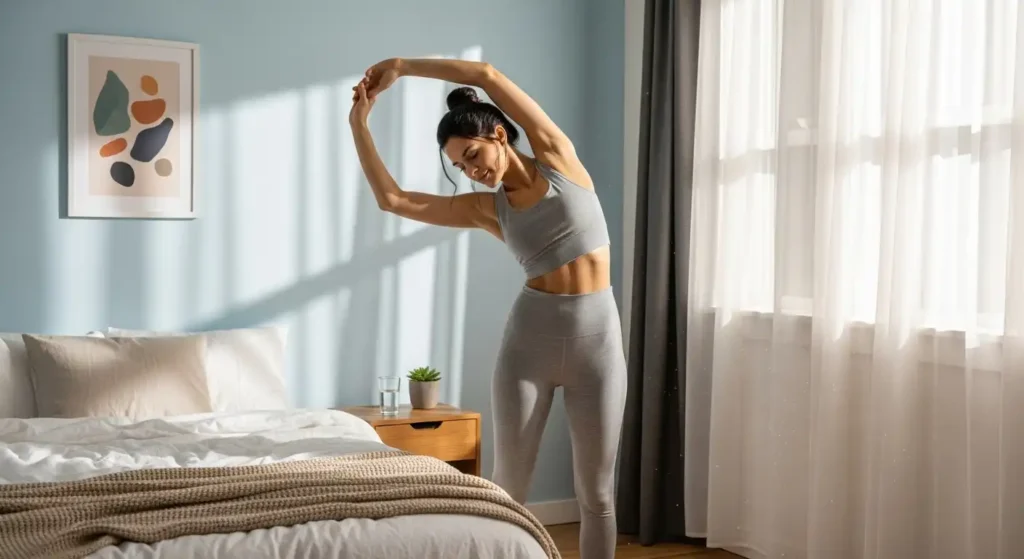
How Your Body Reacts in the First 10 Minutes After Waking Up
When you first wake up, your body moves from rest to motion, triggering several quick physiological changes that make stretching especially effective.
- Circulation rises: Heart rate increases by about 8–10% within the first few minutes, helping warm muscles and joints.
- Joint fluid redistributes: During sleep, movement slows, and synovial fluid settles. Gentle stretching re-lubricates joints, improving comfort.
- Spinal discs rehydrate overnight: This adds slight height and flexibility in the morning, making early stretches ideal for maintaining spinal mobility.
- Cortisol levels rise naturally: The body’s “wake-up hormone” helps increase alertness, and light stretching enhances this response through deeper breathing and movement.
Why it matters:
Morning stretches work best during this transition period because they activate the body’s natural readiness mechanisms — increasing mobility, improving posture, and reducing the sluggishness that comes from hours of stillness.
Mini Self-Check: How Stiff Are You in the Morning?
A quick self-check can help you understand how much your body needs movement after waking up.
Ask yourself:
- Can you comfortably touch your toes right after getting out of bed?
- Do your shoulders or neck feel tight before breakfast?
- Does your lower back feel stiff when you first sit down?
If you answered “yes” to two or more, your muscles and joints may be holding onto overnight tension. Adding a short morning stretch can noticeably improve flexibility, circulation, and comfort throughout your day.
Tip: Repeat this self-check weekly to track small improvements in mobility and ease.
Expert Tips: How Trainers Make Morning Stretching Stick
Building consistency is often harder than the stretches themselves. Fitness coaches use simple cues and habit-stacking strategies to help clients keep up with morning mobility.
Trainer Insights:
- “Pair your morning stretch with a cue — like starting the coffee maker or brushing your teeth — to make it automatic.” — Fitness Coach Tip
- “Keep a yoga mat near your bed. Reducing setup time means you’ll actually do it.” — Pro Habit Insight
- “End your stretch with one deep breath. It signals completion and sets a calm tone for your morning.” — Wellness Coach
These small tweaks create structure and remove friction, turning your stretch from a task into a natural part of your wake-up routine.

Myth vs Fact: Morning Stretching Edition
| Myth | Fact |
|---|---|
| Stretching must hurt to work | Stretching should feel light and controlled, never painful. |
| You need 20 minutes to feel results | Just 5 minutes of gentle stretching can improve flexibility and alertness. |
| Only flexible people benefit from stretching | Everyone benefits from daily mobility work, no matter their fitness level. |
Why it helps readers:
Clarifying these common misconceptions encourages consistency and prevents injury. It also reassures beginners that light, mindful movement is enough to make progress.
Track Your Morning Mobility (Printable Mini Tracker)
Tracking how your body feels after each session builds awareness and motivation.
| Date | Minutes Stretched | How You Felt After |
|---|---|---|
| Monday | 5 | Less stiff, more awake |
| Tuesday | 5 | Looser shoulders |
| Wednesday | 4 | Easier to sit upright |
You can download pdf file here