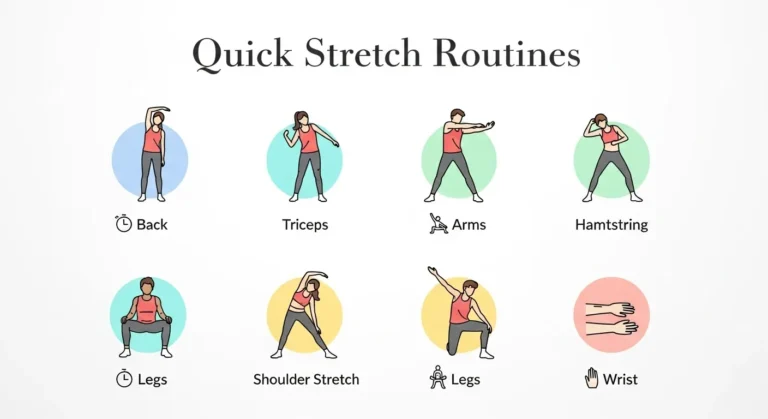

Quick Stretch Routines are simple, time-efficient sessions designed to release tension, improve flexibility, and boost circulation in just a few minutes. These routines are ideal for busy schedules, helping you feel looser, more focused, and ready to move without taking up much time.
What Is a Mobility Boost ?
A mobility boost refers to a brief session or series of movements aimed at improving the body’s ability to move freely and efficiently.
Unlike static stretching, mobility boosts combine movement and control to enhance joint function, coordination, and overall body performance.
Key traits:
- Involves dynamic movements rather than holding a stretch
- Focuses on joint health, not just muscle length
- Typically lasts 5–15 minutes
- Can be used before workouts, during breaks, or as a standalone session
Why Mobility Matters
Good mobility allows smoother, safer, and more efficient movement in daily life and exercise. Limited mobility can lead to stiffness, poor posture, and increased risk of strain.
Quick Data Snapshot
| Factor | With Regular Mobility Work | Without Mobility Work |
|---|---|---|
| Joint Range of Motion | +10–20% improvement (average) | Often decreases over time |
| Muscle Soreness | Reduced by 25–30% post-activity | Prolonged soreness |
| Injury Risk | Lower, due to better joint control | Higher, due to stiffness and imbalance |
Benefits include:
- Better joint range and flexibility
- Improved posture and muscle balance
- Reduced stiffness from prolonged sitting
- Enhanced recovery and workout performance
Mobility vs Flexibility: What’s the Difference?
| Aspect | Mobility | Flexibility |
|---|---|---|
| Definition | Ability to move joints through a full range with control | Ability to lengthen muscles passively |
| Goal | Functional movement and stability | Muscle relaxation and elongation |
| Example | Controlled hip circles | Static hamstring stretch |
| Duration | Dynamic, 5–10 seconds per move | Static, 20–60 seconds per stretch |
In short: Flexibility is about muscle length; mobility is about controlled motion.
Common Mobility Boost Techniques
1. Dynamic Joint Circles
Focus on major joints (neck, shoulders, hips, ankles) to increase fluid motion.
2. Controlled Articular Rotations (CARs)
Slow, precise joint movements to strengthen and maintain joint integrity.
3. Flow-Based Mobility
Sequences like “World’s Greatest Stretch” or yoga-inspired flows that combine flexibility and strength.
4. Resistance Band Mobility
Adds light resistance to improve joint control and muscle activation.
5. Functional Movements
Squats, lunges, or reach-and-rotate drills that simulate real-life movement patterns.
When to Use Mobility Boosts
| Timing | Goal | Ideal Duration |
|---|---|---|
| Morning | Wake up the body, reduce stiffness | 5–10 min |
| Pre-Workout | Prepare joints for movement | 5–8 min |
| Midday Break | Counteract sitting fatigue | 3–5 min |
| Post-Workout | Restore range, ease soreness | 7–10 min |
| Evening | Relax body before rest | 5–8 min |
Tip: A short, consistent practice (even 5 minutes daily) is more effective than occasional long sessions.
Key Takeaways
- Mobility boosts are short, controlled movement sessions for joint health and range.
- They enhance posture, reduce stiffness, and improve functional strength.
- Consistency matters more than intensity.
- Pair mobility with stretching for complete movement health.
How to Build a Simple Mobility Boost Routine
Step 1: Target 3–4 major areas (shoulders, hips, spine, ankles)
Step 2: Perform 1–2 moves per area dynamically
Step 3: Move slowly, focus on control over intensity
Step 4: Breathe evenly and avoid forcing the range
Example 5-Minute Flow
- Shoulder rolls (30 sec)
- Cat-cow spine flow (45 sec)
- Hip circles (45 sec each side)
- Standing reach and twist (1 min)
- Deep squat hold with shifts (1 min)
Mobility Boosts: Unique, Value-Adding Section Ideas
1. Mobility Reality Check: Where Do You Stand?
Purpose: Help readers evaluate their current mobility with a short self-assessment.
Format: 5 quick questions like “Can you rotate your neck fully without discomfort?” or “Can you perform a deep squat with heels flat?”
Fit: Place near the start or middle to increase reader interaction and retention.
Bonus: Add a results scale such as “Your mobility is moderate — focus on hips and shoulders.”
2. What the Data Says About Daily Stiffness
Purpose: Add authority using research-backed data that connects sedentary lifestyles to mobility issues.
Format: Short data table:
| Data Point | Source | Insight |
|---|---|---|
| 1 in 3 adults sit over 8 hours daily | CDC | Leads to hip and back stiffness |
| 68% of remote workers report neck tension | 2024 Survey | Caused by static posture |
| Fit: Place after “Why Mobility Matters” to reinforce the need for regular movement and context for readers. |
3. Trainer Tip: Mobility Boosts That Actually Save Time
Purpose: Add expert credibility with brief, insight-style quotes.
Format: 2–3 short pro tips such as:
| Myth | Fact |
|---|---|
| “Mobility is only for athletes.” | It benefits everyone, especially desk workers. |
| “Stretching equals mobility.” | Mobility involves controlled movement, not passive holds. |
| Fit: Place near the end before FAQs to provide clarity and summary value. |
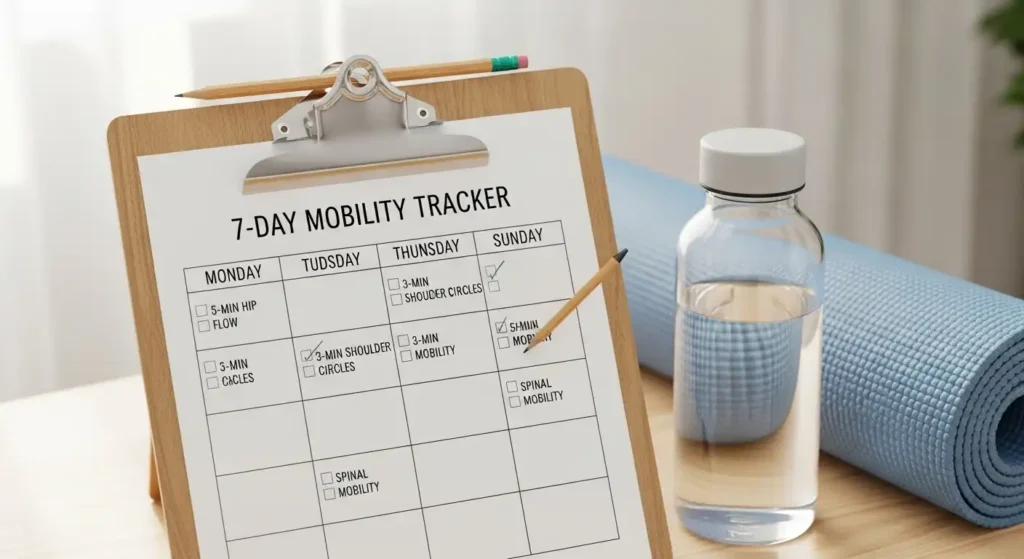
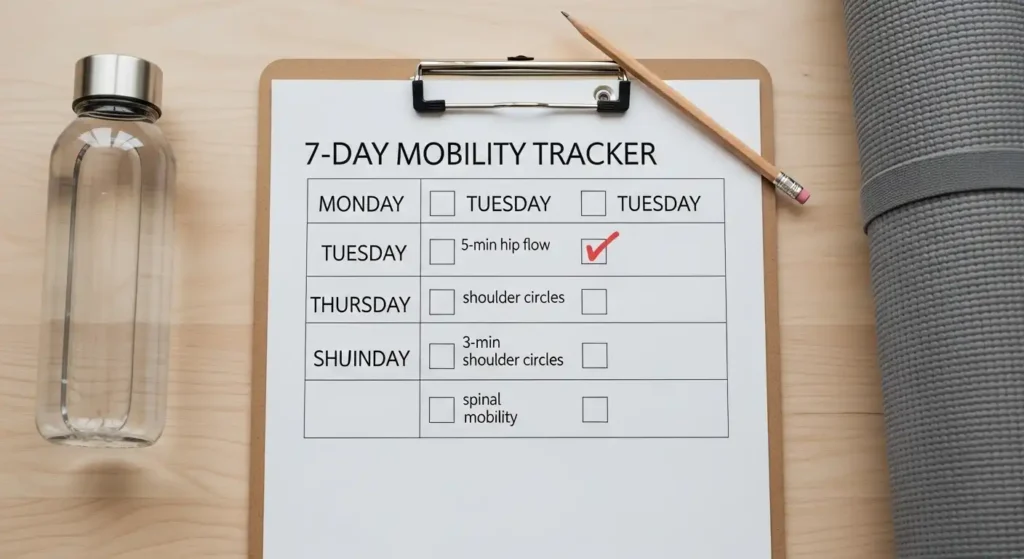
7-Day Mobility Boost Tracker
Purpose: Give readers a tangible takeaway to stay consistent.
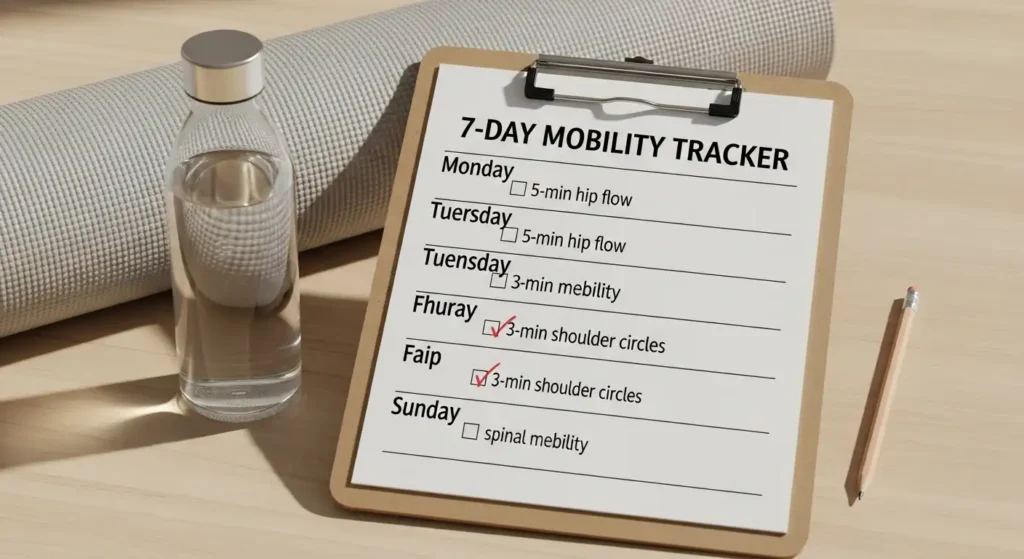
Format: Simple weekly checklist (e.g., Monday–Sunday with boxes for “5-min hips,” “3-min shoulders,” “spinal flow”).
Fit: Final section after “How to Build a Routine” for a practical finish.
Bonus: Encourages habit-building and doubles as shareable content for Pinterest or social media.