
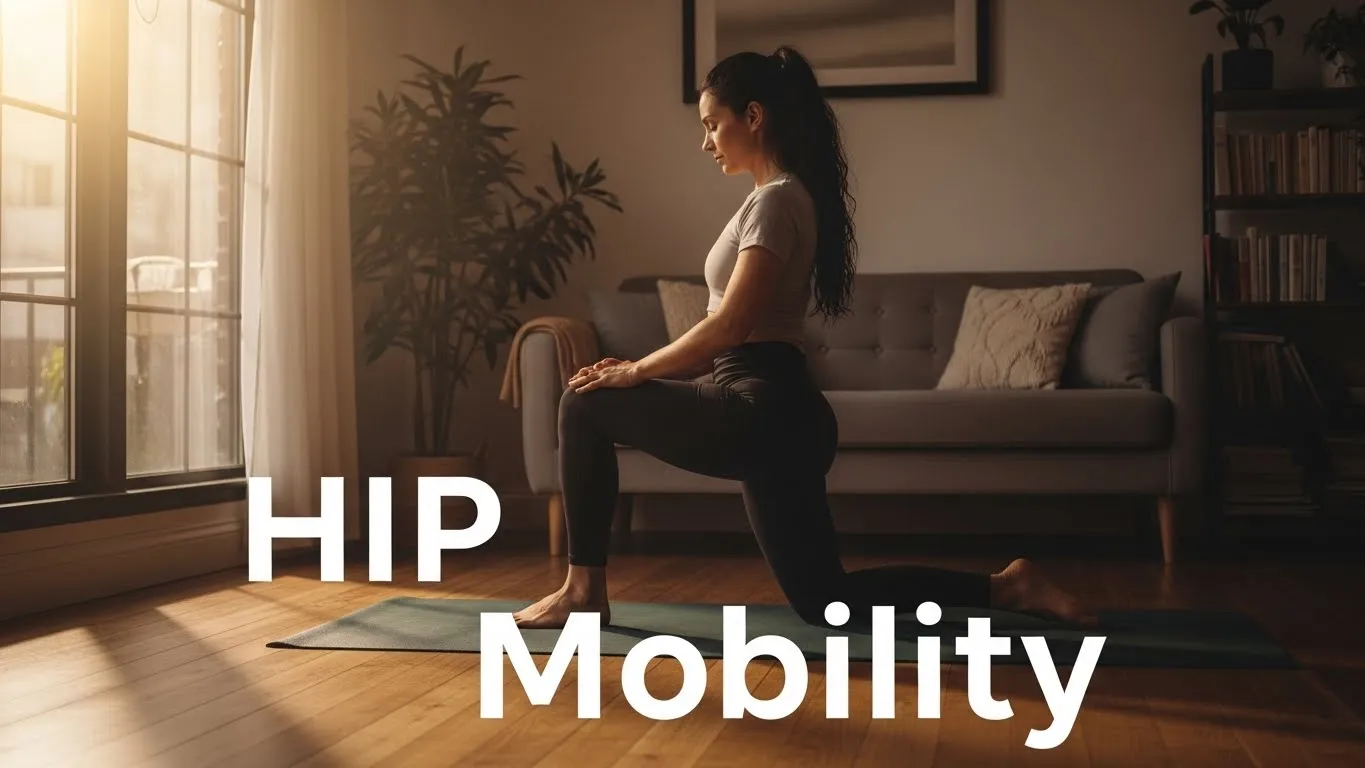
Hip mobility is the usable motion of the hip joint across flexion, extension, rotation and abduction. Improving it reduces stress on the lower back and knees, supports better walking and squatting mechanics, and pairs best with short daily mobility work plus targeted hip and glute strength. Results usually appear within a few weeks of consistent training.
Intro
Hip mobility refers to how freely the hip joint moves and how well surrounding muscles control that range. Limited motion often shows up as stiffness during sitting, difficulty squatting or discomfort around the lower back or knees. Improving mobility supports everyday tasks like standing up, stair climbing and walking.
What Hip Mobility Includes
- Flexion, extension, rotation, abduction
- Control of those ranges, not just passive flexibility
- Muscle balance among hip flexors, glutes, adductors and deep rotators
Why It Matters
- Reduces lumbar and knee compensation
- Supports posture and stable gait
- Enhances movement for running, lifting and daily tasks
Quick At-Home Mobility Checks
- Straight Leg Raise: Compare left and right height.
- Bodyweight Squat: Note depth and hip stiffness.
- Seated Hip Rotation: Rotate knees inward and outward, check symmetry.
Dynamic and Static Work
| Type | Best Use | Pros | Considerations |
|---|---|---|---|
| Dynamic mobility | Warmups | Improves control, increases circulation | Less effective alone for long-term stiffness |
| Static stretching | After workouts | Gradual tissue length changes | Avoid before heavy lifting |
| PNF / contract-relax | Stubborn tightness | Fast ROM gains | Requires control to avoid overstretching |
How to Structure a Hip Mobility Session
Total time: 5–15 minutes
- Warmup: 1–3 minutes light marching or leg swings
- Dynamic mobility: 3–7 minutes
- Optional static or PNF holds: 1–3 minutes
- End-range strength: 2–5 minutes (glute bridge, single-leg hinge, band walks)
Short Hip Mobility Routines Table
| Routine | Duration | Exercises | Reps or Time | Purpose |
|---|---|---|---|---|
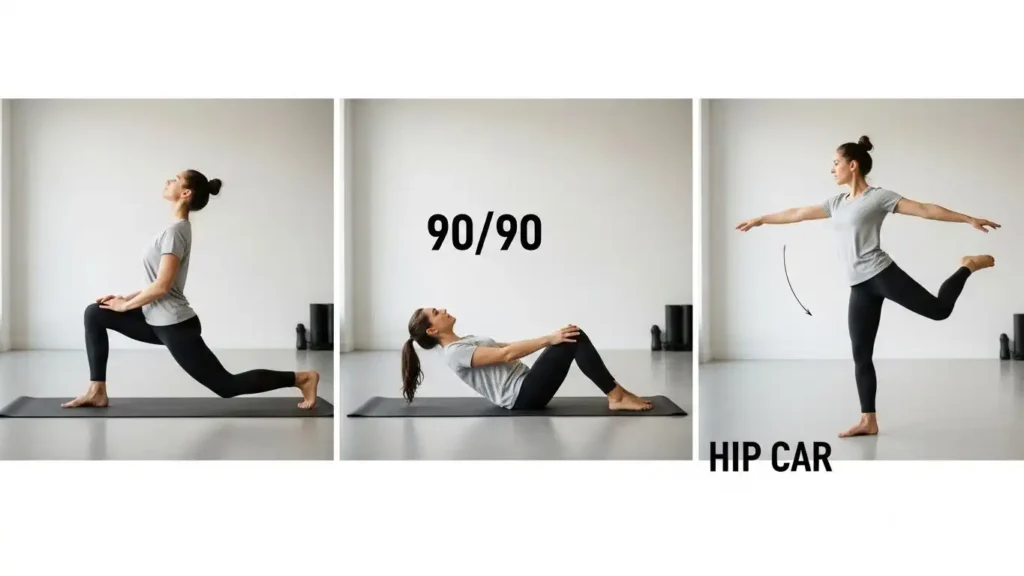
| Routine A: Daily 5-Minute Reset | 5 minutes | Leg swings, Lunge with twist, 90/90 hip switches, Glute bridge | 10 each side, 6 each side, 6 each way, 3 x 10 | Quick opener to loosen hips after sitting and prepare for daily movement |
| Routine B: 10-Minute Mobility + Strength | 10 minutes | Hip CARs, Reverse lunge to hip flexor stretch, Cossack squat, Band walks, Single-leg hinge | 5 circles each way, 6 each side, 6 each side, 30 seconds, 8 each side | Improves mobility and reinforces new range with glute strength |
| Routine C: 15-Minute Deep Session | 15 minutes | Foam roll quads and glutes, PNF hip flexor stretch, Step-downs or slow hinge work | 90–120 sec each area, 2–3 cycles, 3 x 6–8 | For stubborn stiffness, combining tissue release, stretching and cont |
Key Exercises, Step-By-Step
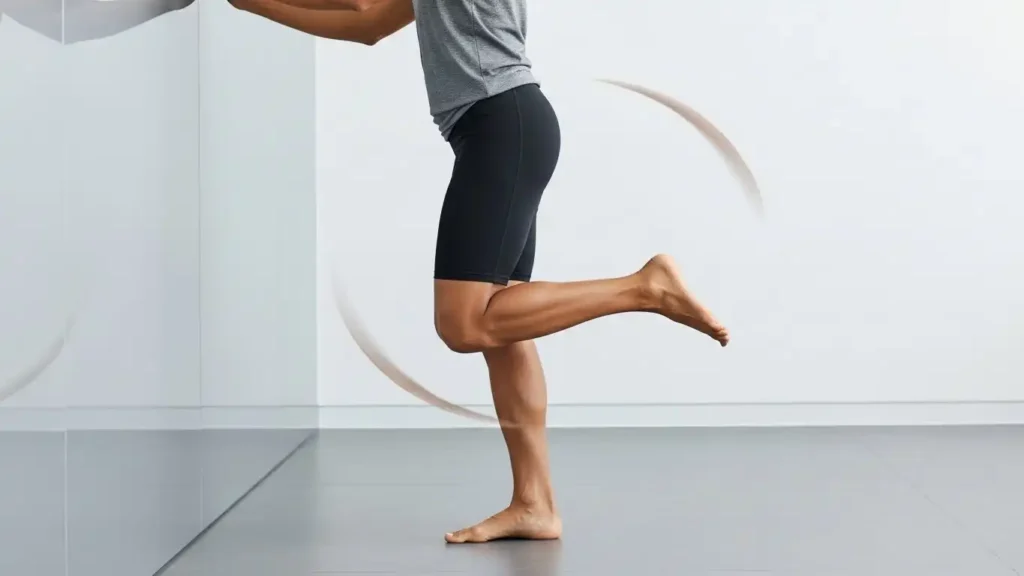
Hip CARs
- Lift knee to 90 degrees
- Slowly circle leg outward and backward
- Keep pelvis still, move through full safe range
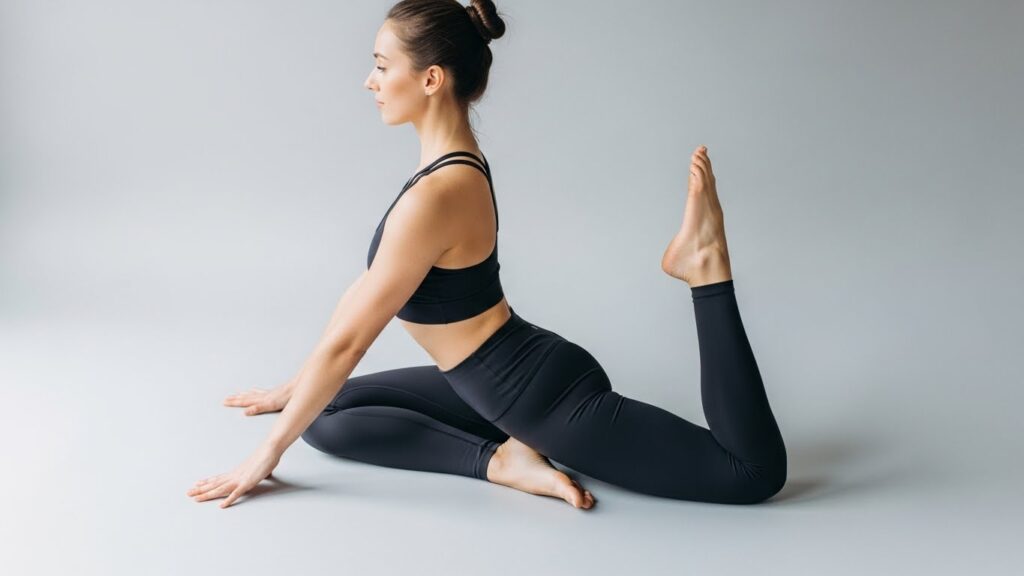
90/90 Hip Switch
- Sit with both legs bent at 90 degrees
- Rotate hips to switch sides
- Keep torso tall, move smoothly
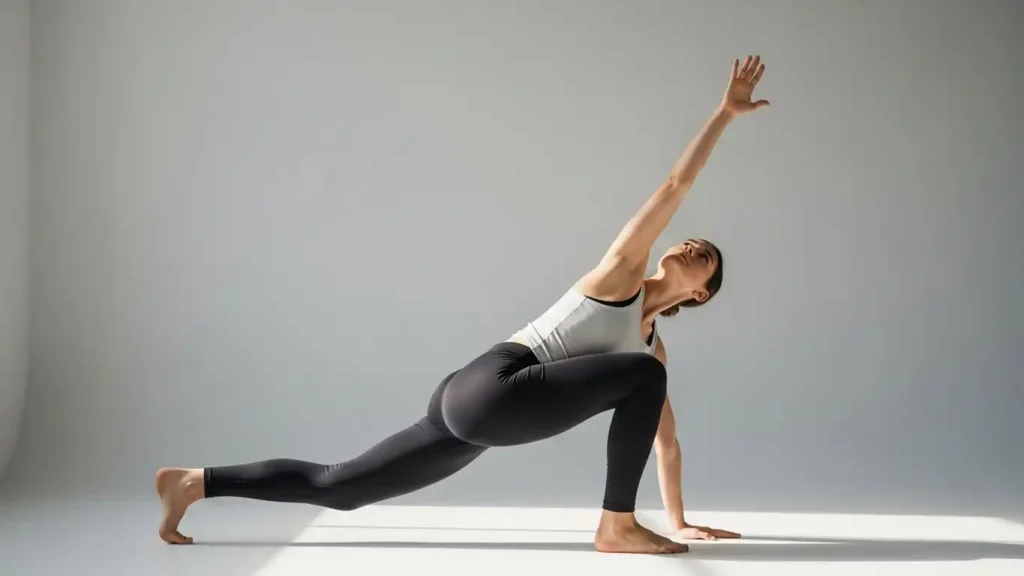
Lunge With Twist
- Step into lunge
- Drop hips
- Rotate toward front leg for two seconds
Benefits at a Glance
| Benefit | Effect |
|---|---|
| Hip opening | Reduces stiffness in hip flexors |
| Rotation | Improves spine mobility |
| Core activation | Supports posture and stability |
| Warmup effect | Prepares body for training |
Common Causes of Tight Hips
- Long sitting hours
- Weak glutes, dominant quads
- Old injuries or joint irritation
- Lack of rotation work in daily life
When to Seek Professional Help
- Sharp hip pain
- Clicking with pain, locking or giving way
- No improvement after 4–6 consistent weeks
