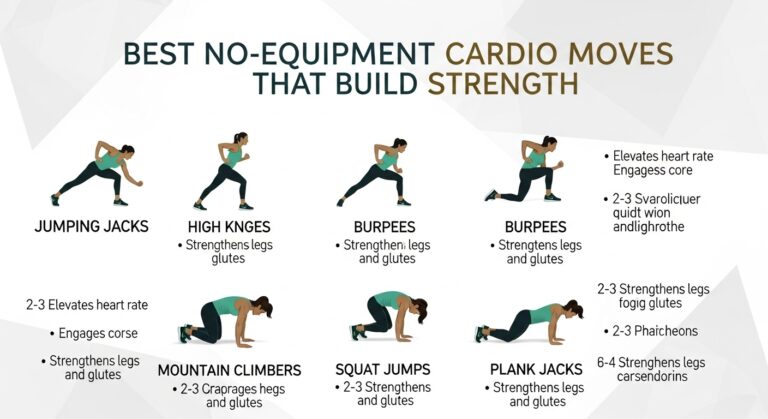

How to combine strength and cardio in one workout without overtraining: use smart sequencing, control volume and intensity, prioritize recovery, and choose formats that match goals. Alternate hard strength and moderate cardio, or do short high-intensity intervals after focused strength sets, keeping total weekly load steady to avoid excess fatigue.
- Strength-first, cardio-finish: prioritize heavy lifts early, add steady-state or intervals for 10–15 minutes after strength. Best when strength is primary goal.
- Cardio-first, strength-after: short low-to-moderate cardio warm-up only, then strength. Avoid long cardio before heavy lifts. Use only if conditioning is primary.
- Alternating sets (pairing): alternate a strength set with a low-fatigue cardio interval (example: squat set, 60-second row, rest). Efficient for time and keeps intensity controlled.
- Circuit or metabolic strength: string 4–6 compound moves as a circuit (40/20 or 30/30), using moderate load for strength and elevated heart rate for cardio. Good for general fitness but moderate strength gains.
- Finishers: keep the main strength work intact, then add a short finisher (EMOM or AMRAP 6–12 minutes) for conditioning.
- Limit heavy lifting volume: keep heavy compound sets to 2–5 sets per exercise if also adding cardio.
- Use RPE to guide intensity: heavy strength sets RPE 7–9, cardio intervals RPE 7–9 but keep total high-intensity minutes under 10–15 per session if training frequently.
- Weekly load cap: if doing combined sessions 3–5 times per week, reduce per-session strength volume compared with pure strength programs.
- Monitor recovery: track sleep, resting heart rate, and performance; drop volume if progress stalls or fatigue rises.

30-minute strength-priority session
- Warm-up 5 minutes mobility and light cardio.
- Strength block 15 minutes:
- A1: Back squat 3 sets × 5 reps (2–3 min rest)
- A2: Romanian deadlift 3 sets × 6–8 reps (superset or separate)
- Cardio finisher 8–10 minutes: 30s hard / 30s easy bike or row.
- Cool-down 2 minutes stretching

20-minute time-crunch circuit
- Warm-up 2 minutes.
- Circuit 15 minutes: 5 rounds, 40 seconds work / 20 seconds rest, move through: kettlebell goblet squat, push-up, kettlebell swing, mountain climbers.
- Cool-down 3 minutes.

Alternating sets example for balanced session
- Warm-up 5 minutes.
- Strength set: Bench press 4 × 6 (90s rest)
- Cardio set between strength: 60 seconds easy jump rope or bike after each bench set.
- Finish with accessory core work 5 minutes.
Progression and programming
How to progress safely
- Increase load for strength exercises every 1–3 weeks by 1–5% or add 1 rep per set.
- Increase conditioning by adding 30–60 seconds total high-intensity time per week or reducing rest slightly.
- Swap one combined session per week for a pure strength session to preserve maximal strength adaptations.
- Use deload weeks: reduce volume by 30–50% every 4–8 weeks.
Recovery and signs of overtraining
Recovery guidelines
- Sleep 7–9 hours per night, prioritize protein intake 20–40 g per meal, hydrate.
- Schedule at least one full rest or active recovery day per week.
- Use mobility and low-intensity aerobic work on recovery days.
Signs you are overtraining
- Persistent performance drop, elevated resting heart rate, poor sleep, mood changes, persistent soreness beyond 72 hours, reduced motivation. If these appear, reduce intensity or frequency for 1–2 weeks.
Practical tips and common misconceptions
- You will not lose strength if you add short, controlled cardio; excessive volume and high-frequency HIIT are the main threats.
- Order matters: heavy strength first when strength matters most, short conditioning first only when necessary.
- Quality beats quantity: a focused 30-minute combined session is better than 60 unfocused minutes.
- Track objective metrics: reps, sets, RPE, resting HR, and sleep quality to steer adjustments.