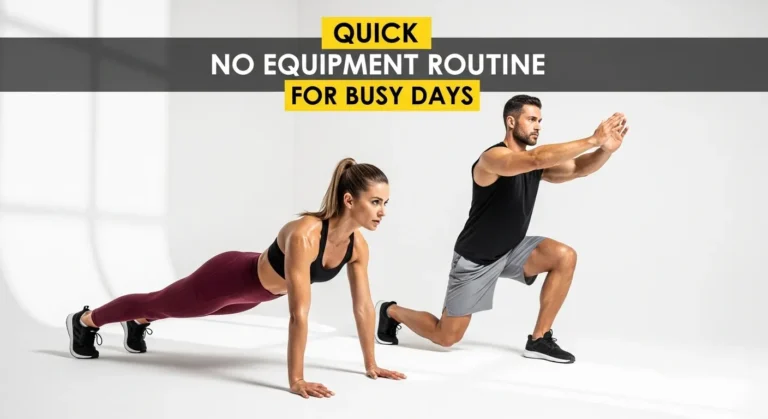
No-Equipment Lower Body Sculpt is a bodyweight-focused routine that builds leg and glute strength, improves balance, and increases muscular endurance without gear. This guide includes a ready-to-do routine (two time options), exercise cues, progressions, a 4-week sample plan, calorie estimates, common mistakes, and FAQs so readers can safely level up at home.
Are Fat-Burning Cardio Circuits
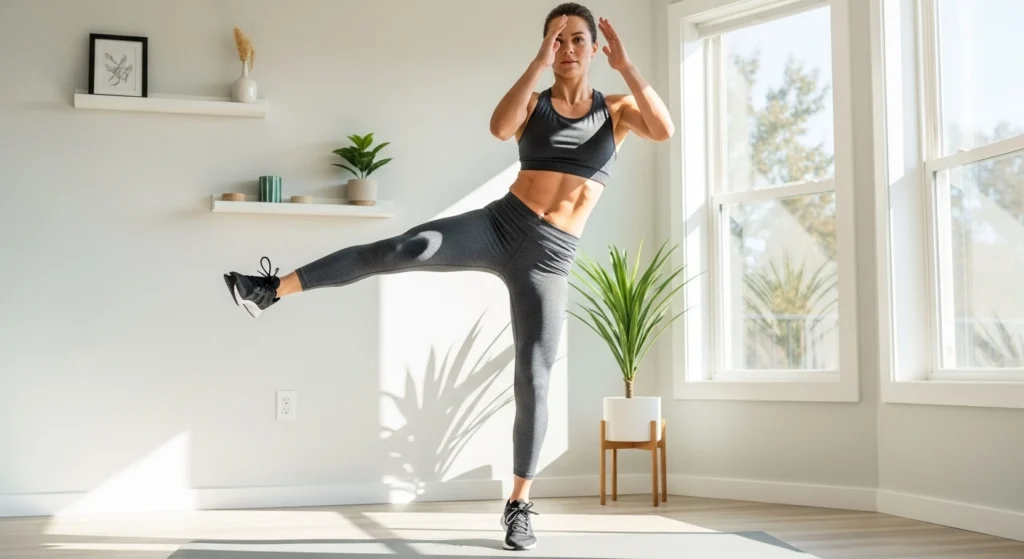
The No-Equipment Lower Body Sculpt Routines
Format notes: perform the warm-up, then pick one routine. Work : rest ratios given are flexible—shorten rest or repeat circuits to increase difficulty.
12-Minute Sculpt (efficiency + tone) — 6-move circuit, repeat twice
Work 45 seconds, rest 15 seconds per move, repeat circuit twice (12 minutes total).
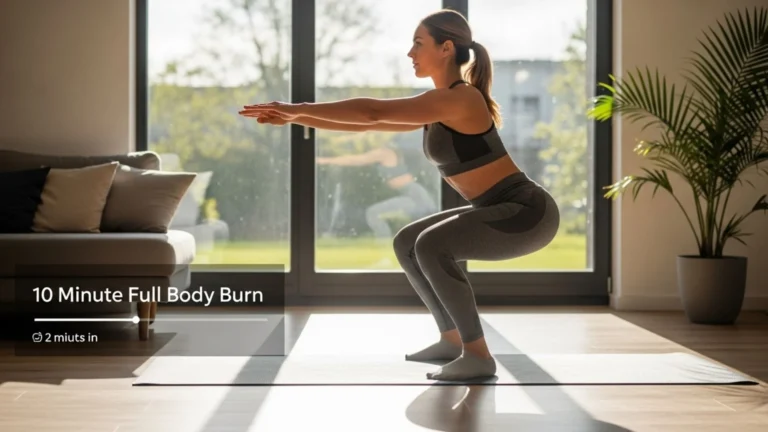
- Bodyweight Squat — drive hips back, knees track toes, chest upright. Modification: box/seat squat. Progression: tempo squat (3s down).
- Reverse Lunge (alternating) — long step back, soft front knee, upright torso. Modification: static split squat. Progression: slow eccentric.
- Single-Leg Glute Bridge (alternating) — hips high, drive through heel. Modification: double-leg bridge. Progression: hold top 2–3 seconds.
- Bulgarian Split (using chair/bed edge) or Elevated Rear-Foot Split — front knee over ankle, torso upright. If no elevated surface, perform deep reverse lunges.
- Lateral Lunge or Curtsy Lunge — controlled side step, weight in the mid-foot. Modification: smaller range of motion.
- Standing Calf Raise (single or double) — slow concentric and eccentric phases. Progression: single-leg calf raises.
Cool down: 60 seconds of hamstring reach, quad stretch, deep breaths.
20-Minute Strength-Focus (hypertrophy-style bodyweight) — 5 moves, 3 rounds
Work 40 seconds, rest 20 seconds per move, 3 rounds (15 minutes) plus 3–5 minute warm-up/cooldown.
- Slow Tempo Squat (4s down, 1s up)
- Bulgarian Split Squat (each leg alternates per round)
- Single-Leg Romanian Deadlift (bodyweight) — hip hinge, reach toward floor
- Glute Bridge March (double-leg bridge hold with alternating knee lifts)
- Wall Sit with Heel Raises (wall sit hold plus calf raises)
Use this session for slower, higher-tension reps designed to increase time under tension and build lower-body strength without weights.
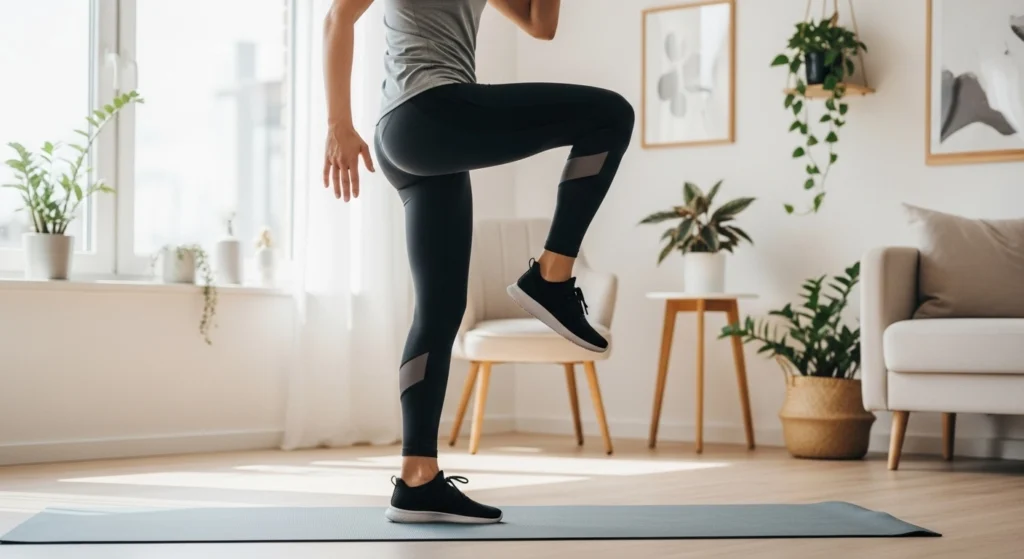
Exercise Cheat Sheet (quick reference)
| Exercise | Primary targets | Cues | Mod / Progression |
|---|---|---|---|
| Bodyweight Squat | Quads, glutes, core | Sit back, heels down | Mod: box squat, Prog: jump squat or weighted hold |
| Reverse Lunge | Quads, glutes, hamstrings | Long step, soft knee | Mod: static split, Prog: slow eccentric |
| Single-Leg Glute Bridge | Glutes, hamstrings | Drive through heel | Mod: double-leg bridge, Prog: pause at top |
| Bulgarian Split Squat | Quads, glutes | Balance, upright torso | Mod: lower elevation, Prog: increase depth |
| Lateral Lunge | Glutes, adductors | Lead with hip, keep chest tall | Mod: shallow step, Prog: add pulse |
| Calf Raise | Calves | Full range, slow descent | Mod: double leg, Prog: single-leg |
Progression and Overload (how to get stronger without weights)
- Increase time under tension: slow the eccentric (lowering) phase to 3–4 seconds.
- Add reps or rounds: start with 1–2 rounds, add a round every 1–2 weeks.
- Unilateral progression: move from bilateral to single-leg variations (e.g., two-leg bridge → single-leg bridge).
- Reduce rest: lower rest intervals by 10–20 seconds per session to raise intensity.
Research shows progressive bodyweight protocols can improve lower-limb strength and functional outcomes when volume and difficulty are increased systematically. For some hypertrophy goals, free weights may produce larger gains, but bodyweight training still develops relative strength and endurance when progressed correctly.
Sample 4-Week Plan (time-efficient progression)
| Week | Sessions / week | Focus | Notes |
|---|---|---|---|
| 1 | 3 | Technique, baseline volume | 12-min sculpt ×3, focus on form |
| 2 | 3 | Volume | 12-min sculpt ×4 or 20-min session ×2 |
| 3 | 4 | Intensity | 20-min strength focus ×2, 12-min blast ×2 |
| 4 | 4 | Progression | Add tempo, reduce rest, add single-leg variations |
Track RPE and movement quality; increase difficulty only when form stays clean.
Data-driven calorie and intensity guide
Use MET estimates and the Compendium of Physical Activities to approximate energy use for lower-body circuit training (circuit-style bodyweight work often ranges 3.5–7.5 METs depending on intensity). For a 10-minute session, sample estimates:
Calculation method: kcal/min = MET × 3.5 × weight(kg) ÷ 200. See Compendium and MET guidance.
Estimated calories burned for a 10-minute lower-body circuit
| Body weight (lb) | Moderate (MET≈6) ≈ 10 min | Vigorous (MET≈8) ≈ 10 min |
|---|---|---|
| 125 | ~60 kcal | ~79 kcal |
| 155 | ~74 kcal | ~98 kcal |
| 185 | ~88 kcal | ~118 kcal |
Notes: these are approximations; actual energy use depends on pace, rest times, fitness, and movement selection.
Common mistakes and how to avoid them
- Knees caving in during squats or lunges: cue “knees track toes,” strengthen glute med with lateral work.
- Using momentum in single-leg moves: slow the tempo to increase muscle activation.
- Skipping unilateral progression: single-leg strength is key for balance and symmetry.
- Doing high volume with poor form: prioritize fewer clean reps over many rushed repetitions. Harvard Health highlights the advantages of bodyweight training for endurance and functional strength when performed correctly.
When bodyweight is enough and when to add load
Bodyweight training builds relative strength, endurance, and mobility and can be effective for many goals. If the primary goal is maximal hypertrophy or large absolute strength gains, progressive external load (weights) tends to be more time-efficient. Use bodyweight training for accessibility, movement quality, and conditioning, then add external load when you need further progressive overload.
Quick programming tips for busy users
- Pair 2 lower-body sessions weekly with 1 full-body or cardio session.
- Follow a “form-first” rule; add one progression only after two clean sessions.
- Use a phone timer and journal one metric each session: rounds, lowest rest, or perceived exertion.