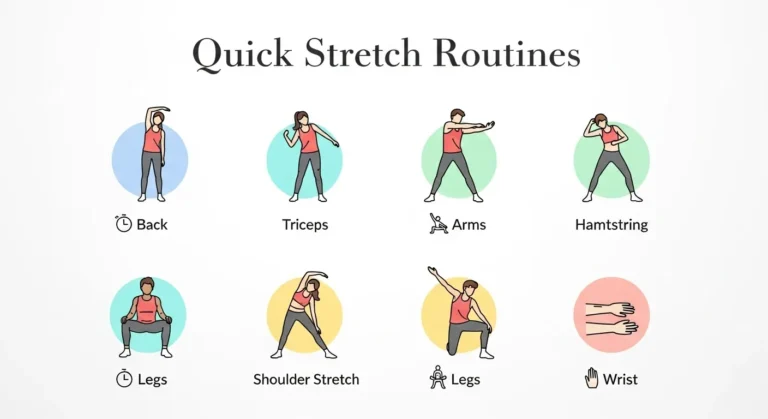
The 7-Minute Standing Workout is a no-equipment, seven-move routine done in short intervals to raise heart rate, strengthen legs, core, and shoulders, and improve mobility. Ideal for small spaces, office breaks, or quick energy boosts, this routine includes a brief warm-up, scalable modifications, progressions, and a data-driven calorie estimate so you can track effort and adapt the plan to your goals.
What Are Recovery Workouts
Recovery workouts are light physical activities designed to promote blood flow and muscle repair without adding physical stress. They act as a bridge between complete rest and intense training, helping the body recover faster while maintaining mobility and movement efficiency.
Examples: brisk walking, light cycling, gentle yoga, mobility flows, or easy swimming.
Why Recovery Workouts Matter
Recovery allows muscles and joints to adapt and rebuild after exercise. Skipping recovery often leads to fatigue, tightness, or plateauing performance.
Benefits include:
- Reduced soreness and stiffness
- Improved flexibility and range of motion
- Better circulation for faster repair
- Enhanced energy balance and mental recovery
- Lower risk of overuse injuries

Active vs Passive Recovery
| Type | Description | Examples | Best For |
|---|---|---|---|
| Active Recovery | Gentle movement that boosts circulation without fatigue | Walking, yoga, mobility flow | Post-workout or light days |
| Passive Recovery | Complete rest for full repair | Sleep, massage, stretching | After intense training or fatigue |
| Tip: Combining both throughout the week keeps muscles responsive and prevents burnout. |
How Often Should You Do Recovery Workouts ?
Frequency depends on your activity level and training intensity.
- Light exercisers: 1–2 sessions weekly
- Regular trainers: 2–3 sessions weekly
- High-intensity athletes: alternate between active and rest days
General rule: If soreness affects form or range of motion, replace your workout with an active recovery session.
Best Types of Recovery Workouts
- Low-Intensity Cardio: 15–30 minutes of walking or cycling to enhance blood flow.
- Mobility or Stretch Flow: Controlled joint movements that maintain flexibility.
- Yoga or Pilates: Focused breathing with mindful movement to ease tension.
- Foam Rolling and Myofascial Release: Gentle tissue pressure to reduce tightness.
- Breathing and Relaxation Drills: Slow, deep breathing to restore calm and oxygen balance.
Common Mistakes During Recovery
| Mistake | Why It Hurts Recovery | Better Approach |
|---|---|---|
| Skipping rest days | Prevents muscle repair | Schedule one full rest day weekly |
| Doing recovery too hard | Causes new fatigue | Keep heart rate under 60% of max |
| Ignoring nutrition | Slows healing | Replenish fluids, carbs, and protein |
| Poor sleep | Reduces growth hormone | Aim for 7–9 hours nightly |
Signs You Need More Recovery
- Ongoing soreness for 3+ days
- Drop in strength or energy
- Poor sleep quality or irritability
- Loss of motivation
- Elevated resting heart rate
If you notice these, add more active recovery or take a complete rest day.

Sample 3-Day Recovery Schedule
| Day | Activity | Duration | Focus |
|---|---|---|---|
| Monday | Full-body mobility flow | 15 min | Joint range and fluidity |
| Thursday | Light walk or cycle | 20 min | Blood flow and relaxation |
| Sunday | Yoga or deep stretch | 25 min | Flexibility and calm recovery |
Recovery Reality Check: How Rested Are You?
Purpose: Add interactivity with a short self-assessment to help readers gauge recovery quality.
Format: 5 quick questions such as “Do you wake up with muscle stiffness?” or “Can you repeat yesterday’s workout with similar energy?”
Fit: Place near the start to increase engagement and help readers identify their recovery needs.
Bonus: Add a scoring key with results like “You’re under-recovered—try adding an active rest day.”
What the Science Says About Muscle Recovery
Purpose: Add credibility with data-backed insights showing why recovery matters.
Format: Small data table or research callout:
| Finding | Source | Insight |
|---|---|---|
| 70% of adults report muscle soreness after 3+ workout days per week | Journal of Sports Medicine | Indicates lack of structured recovery |
| Sleep improves muscle recovery rate by 30–40% | Sports Health Review | Reinforces the role of rest quality |
| Fit: Place after “Why Recovery Workouts Matter” to strengthen authority with factual context. |
Expert Tip: The 60/60 Recovery Rule
Purpose: Share practical, trainer-style insight that feels credible and applicable.
Format: 2–3 short quotes, for example:
Coach Ryan: “For every 60 minutes of training, dedicate 60 minutes to low-intensity movement or rest across the week.”
Physio Lily: “Recovery doesn’t mean stopping—it means adjusting intensity so your body can adapt.”
Fit: Ideal between “Best Types of Recovery Workouts” and “Common Mistakes” for expert variety.

Recovery Myths vs Facts
Purpose: Correct common misconceptions while boosting SEO through scannable, shareable content.
Format: Comparison layout:
| Myth | Fact |
|---|---|
| “More sweat means better recovery.” | Recovery depends on circulation, not exertion. |
| “Stretching replaces rest.” | Stretching helps, but muscles still need downtime. |
| Fit: Place before FAQs to add clarity and educational depth. |
Key Takeaways
- Recovery workouts improve performance, reduce stiffness, and sustain energy.
- Alternate active and passive recovery for balanced progress.
- Light, controlled movement supports long-term mobility and muscle health.
- Consistent rest, hydration, and nutrition complete the recovery cycle.
7-Day Recovery Planner
Purpose: Provide readers with a practical takeaway to structure weekly recovery.
Format: Simple planner layout with boxes for mobility, stretching, walking, and rest days.
Fit: Conclude the guide after “Sample 3-Day Recovery Schedule” for a natural, actionable finish.
Bonus: Makes the article more shareable on Pinterest and useful as a downloadable resource.